Quick answer
Heavy rain can dilute sanitizer, raise water level, introduce debris and contaminants, change pH, and interrupt circulation. If sanitizer was already marginal, algae can develop quickly in warm Florida water.
Quick answer
Heavy rain can dilute sanitizer, raise water level, introduce debris and contaminants, change pH, and interrupt circulation. If sanitizer was already marginal, algae can develop quickly in warm Florida water.
The exact response depends on the pool, equipment, water readings, weather, recent use, and service history. A local evaluation is more reliable than applying one rule to every pool.
Rain is not chemically neutral to the pool
The effect depends on rainfall volume, source water, existing chemistry, and what washes from the deck or landscaping.
Dilution alone can lower concentrations, while runoff introduces additional demand.
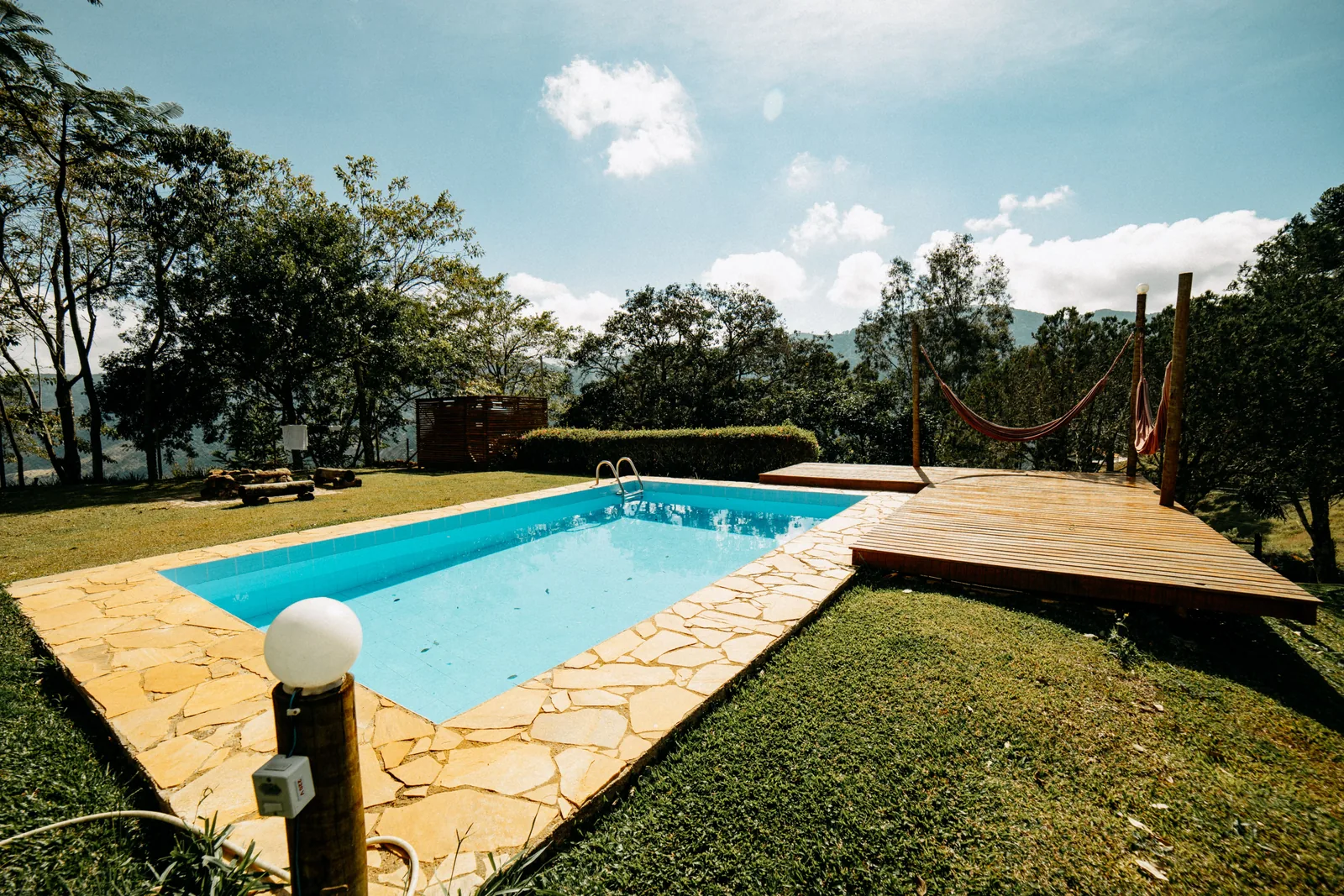
Sanitizer may already be near the minimum
A pool that looks good before a storm can have little reserve for a major contamination event.
Warm water and sunlight accelerate the consequences when circulation is interrupted.
Debris consumes sanitizer
Leaves, soil, pollen, and organic material enter during wind and rain.
Remove debris promptly so sanitizer can focus on the water rather than decomposing material.
High water level can affect skimming
If water rises above the normal skimmer range, surface circulation may be less effective.
Drain only through the intended method and avoid unsafe or unauthorized discharge.
Power loss stops circulation
A pump that is off cannot filter or distribute chemicals.
After power returns, inspect equipment and restore operation only when safe.

pH and alkalinity can shift
Rain and runoff may change water balance. Guessing can worsen the problem.
Test before making corrections.
Algae can appear quickly in heat
Warm, nutrient-rich, under-sanitized water provides favorable conditions.
Brush early growth and restore a complete treatment plan.
The filter may become overloaded
Storm debris and dead algae can rapidly load filter media.
Watch pressure and clean or backwash according to equipment guidance.
What to do after the storm
When safe, remove debris, check water level, inspect equipment, test, brush, circulate, and service the filter.
Do not swim until visibility and water conditions are appropriate.
Preventive planning
Maintain normal chemistry, keep equipment working, secure deck items, and know the post-storm routine.
A service plan can include storm-response priorities and contact procedures.
Homeowner checklist
Homeowner checklist
- Wait until conditions are safe
- Remove debris
- Check water level and equipment
- Test before dosing
- Brush and circulate
- Service filter
- Retest before swimming
Frequently asked questions
Questions pool owners often ask
Should I shock the pool after every rain?
Not automatically. Test the water and treat based on conditions. Heavy rain, debris, high use, or low sanitizer may justify more aggressive correction.
Can I drain rainwater from the pool?
Use the equipment and discharge method intended for the property and follow local requirements. Avoid substantial draining without qualified guidance.
When should I call a pool professional?
Request help when water remains cloudy or green, circulation stops, equipment leaks or trips power, visibility is poor, or you are unsure how to handle chemicals safely.
References and further reading
Manufacturer instructions, product labels, current public-health guidance, and equipment manuals control the final service decision. These resources provide useful background.